

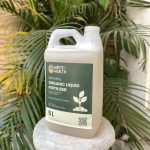
This liquid biofertilizer is produced from post-consumer kitchen waste through a controlled fermentation process utilizing a consortium of 21 microbial strains, including lactic acid bacteria (Lactiplantibacillus, Leuconostoc, Pediococcus), Bacillus spp. (B. subtilis, B. amyloliquefaciens, B. megaterium), actinomycetes (Streptomyces, Micromonospora), photosynthetic bacteria (Rhodopseudomonas, Rhodobacter), yeasts (Saccharomyces, Candida), and nutrient-cycling organisms (Azotobacter, Azospirillum, Pseudomonas). The formulation provides balanced macronutrients (NPK 1 : 0.6 : 1.2) while fostering microbial diversity and soil ecological function. By enhancing nutrient cycling, humus formation, and plant–soil interactions, it supports long-term soil fertility and resilience. Each liter produced prevents the landfilling of organic residues, thereby mitigating methane release and achieving an estimated reduction of 2.1 kg CO₂e per liter.
Instructions for Use
Shake well before use. Dilute 1 part fertilizer with 20 parts water for regular soil drenching, or 1:50 for foliar spray. Apply every 1–2 weeks during active growth. For best results, use on moist soil and in combination with W4W Biochar, and avoid spraying under strong sun. Suitable for vegetables, fruit trees, rice paddies, and ornamental plants. Safe for continuous use — improves soil life over time!
Full Bacteria List
1. Lactic Acid Bacteria (fermentation & pathogen suppression)
Drives initial bokashi-style fermentation, lowers pH, preserves nutrients, and creates probiotic properties.
-
Lactiplantibacillus plantarum (L. plantarum)
-
Lacticaseibacillus casei (L. casei)
-
Levilactobacillus brevis (L. brevis)
-
Leuconostoc mesenteroides
-
Pediococcus pentosaceus
2. Photosynthetic Bacteria (organic acid metabolism, antioxidants, synergy in EM blends)
Improve breakdown and metabolite diversity.
6. Rhodopseudomonas palustris
7. Rhodobacter sphaeroides
3. Yeasts (co-fermentation, vitamin & growth factor production, synergy with LAB)
Boost microbial activity, degrade sugars, produce beneficial metabolites.
8. Saccharomyces cerevisiae
9. Candida utilis
4. Bacillus spp. (enzyme factories, compost accelerators, PGPR, disease suppression)
Spore formers = very resilient; secrete cellulases, proteases, amylases.
10. Bacillus subtilis
11. Bacillus amyloliquefaciens
12. Bacillus megaterium (phosphate-solubilizer)
13. Paenibacillus polymyxa (N-fixation, growth promotion)
5. N-fixers and nutrient cyclers
Capture N, mobilize P & K, enhance soil fertility.
14. Azotobacter chroococcum (free-living N fixer)
15. Azospirillum brasilense (root-associated N fixer, especially grasses)
16. Pseudomonas fluorescens (P-solubilizer, siderophores, pathogen suppression)
17. Pseudomonas putida (biodegrader, rhizosphere competence)
6. Actinomycetes (disease suppression, lignin breakdown, humus formation)
Important for compost maturity and soil disease resistance.
18. Streptomyces griseus (antibiotic & enzyme producer)
19. Streptomyces albus (broad-spectrum disease suppression, soil conditioner)
7. Specialized decomposers (cellulose & fiber breakdown)
Make fibrous kitchen waste (veggie peels, stems, etc.) accessible.
20. Cellulomonas uda (cellulose degrader)
8. Humus builder / extra PGPR
A final “glue” species that synergizes and stabilizes communities.
21. Micromonospora spp. (actinomycete, decomposer & soil fertility enhancer)
Reviews
There are no reviews yet.